Wonder Skies
- 4.8
- Rating
- 100.00K
- Installs
- Free
- Price

 Analysis by App-foxy
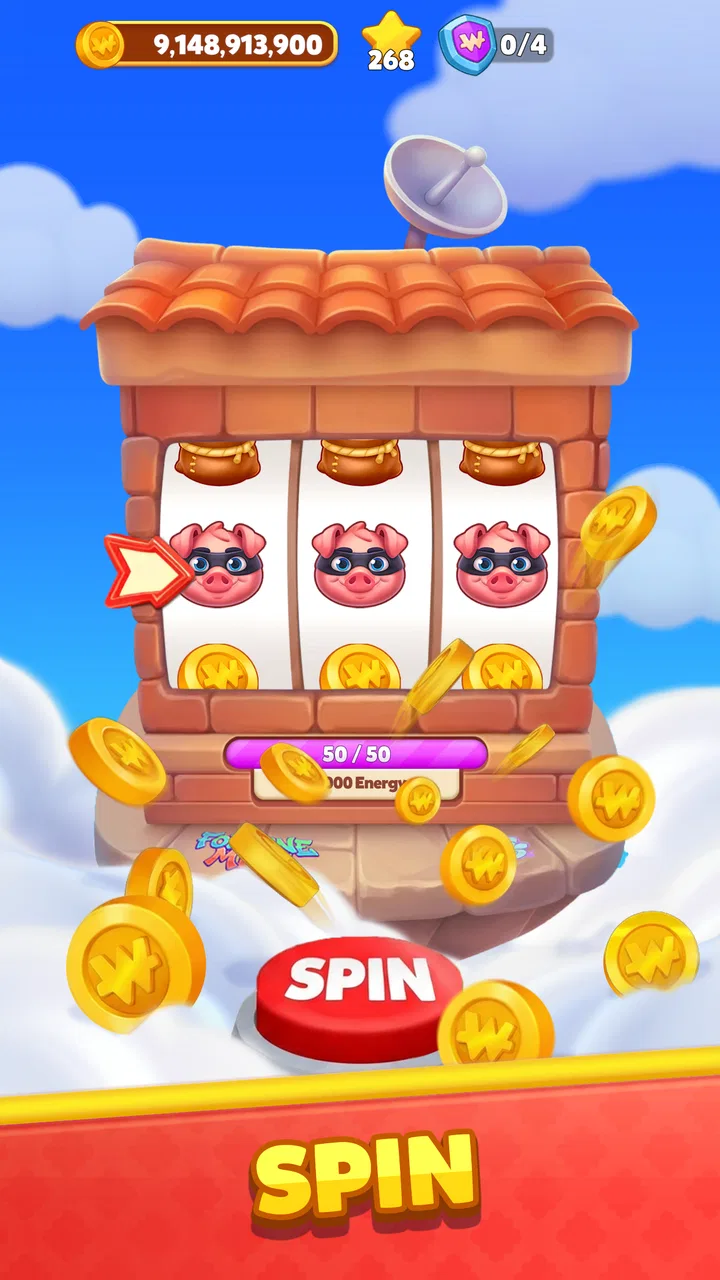
I spent time with Wonder Skies as a relaxed adventure game built around the idea of creating and expanding a world above the clouds. That premise immediately gives it a different mood from the usual action-heavy adventure titles: the appeal is less about rushing from one fight to the next and more about watching a personal space take shape while deciding what to pursue next.
Fortune Mine Games has positioned the game as a free experience for a broad audience, and its Everyone age rating fits the gentle presentation. It is available for devices running Android 7.0 or later, with the current release listed as version 0.46.58. The game has attracted over 10 thousand installs, while its 4.9 average from more than 600 ratings suggests that its central idea connects strongly with the people who have tried it.
My overall impression is positive, but not because it delivers nonstop excitement. Its strength is the steady sense that each session can leave the floating setting a little more developed than before. If you enjoy gradual progress, light exploration and the satisfaction of arranging a growing personal world, this is an appealing choice. If you need constant challenge, complex combat or a tightly directed story, its slower rhythm may feel too restrained.
You May Also Like

 AccuWeather: Weather Radar
AccuWeather Review: A Quick, Clear Forecast for Everyday Decisions
For everyday plans, the best forecast is the one you can understand quickly. AccuWeather makes rain timing, radar, and local conditions easy to act on, with a few trade-offs.

 Hill Climb Racing
Why Hill Climb Racing Still Turns Crashes Into One More Run
A tiny car, a bumpy hill and one more upgrade: Hill Climb Racing keeps resurfacing because its simple chaos makes every near-miss feel personal.

 AliExpress - Shopping App
AliExpress Makes Global Shopping Feel Personal, but Shoppers Bear the Risk
AliExpress turns a global marketplace into a pocket-sized discovery engine. Its reach is useful, its shopping loop compelling, and its trade-offs easy to miss.

 Lords Mobile: Kingdom Wars
Lords Mobile Is a Kingdom-Building Routine, Not a Quick Match
A case-by-case verdict on the building, battles, device demands, and social commitments that make Lords Mobile rewarding for some players and exhausting for others.

 PDF Scanner app - TapScanner
TapScanner Makes Paperwork Easier to Capture, Check, and Share
TapScanner makes scanning with a phone feel less like a rescue operation and more like a dependable step in getting work done. Its capture tools are useful, though not flawless.

 Block Blast!
 Shows How Much a Puzzle Game Can Leave Out
A quiet grid game shows why puzzle players increasingly value instant clarity, repeatable skill and low-pressure play—and where the genre still needs to catch up.
More From Our News Desk
View All News


How the first goals shape the experience
The opening appeal comes from having a clear fantasy to work toward: I am not simply completing isolated levels, but helping establish a place in the sky. That gives early tasks more meaning than a disconnected checklist. Even small advances feel tied to the larger image of a floating world becoming more complete.
This kind of beginning works best when a game gives me a reason to care before it asks me to optimize anything. Wonder Skies benefits from that approach. The early phase feels approachable because the destination is easy to understand, even when the route toward it takes time. I can look at the world, identify what still feels unfinished, and use that visual gap as motivation for the next session.
One useful habit is to treat the first play sessions as orientation rather than a race. I found it more satisfying to notice how each objective contributed to the overall setting instead of trying to push through everything as quickly as possible. Players who focus only on immediate rewards may miss the quieter pleasure of seeing the environment develop as a connected place.
The game is especially suitable for short visits. A quick session can still feel worthwhile when it ends with a visible step forward. That matters on a phone, where I may only have a few minutes between other tasks. Rather than requiring a long uninterrupted commitment, the design encourages me to return, make progress and leave without feeling that I abandoned a complicated plan.
What makes the early loop approachable
The central loop is easy to explain to a friend: explore the possibilities of the sky setting, work toward improvements and gradually make the world feel more like my own. That simplicity is a strength during the first hours because I am not buried under systems before I understand the basic purpose of playing.
It also creates the first important trade-off. A simple loop is welcoming, but it can become repetitive if later goals do not change how I approach the world. The early experience therefore succeeds by making progress emotionally clear rather than mechanically overwhelming. Whether it remains compelling depends on how much variety a player expects from an adventure game.
I would recommend beginning with a modest objective for each visit. Instead of trying to complete every available task, I found it better to choose one meaningful improvement and then stop when that goal was reached. This keeps the pace comfortable and prevents the game from turning a relaxing idea into a routine obligation.
Reading progress through the world itself
The most convincing progress signal is the changing state of the floating environment. In a game centered on building a world, the setting should do more than act as a backdrop, and Wonder Skies makes that sense of development central to its appeal. I pay attention to what has been added, what still looks incomplete and which next step would make the biggest difference to the overall feel.
That visual feedback is more useful than a reward that disappears into a menu. When progress is reflected in the place I am building, returning to the game has a purpose beyond collecting another abstract number. I can compare the current state with my earlier sessions and feel that my time has left a mark.
There is also a practical advantage to this kind of feedback: it helps me decide when to stop. If I have completed a small objective and the world looks noticeably more developed, the session has a natural ending. Games with endless task lists often make me feel that I am always behind. Here, the environment can provide a clearer sense of completion, at least during the earlier stages.
My advice is to avoid judging progress only by how quickly the next unlock appears. Look at the relationship between the goal and the world around it. A slower step may still be worthwhile if it changes the character of the setting more than several minor rewards would. That is one of the less obvious pleasures of the game: the best payoff is not always the most immediate one.
Why unlocks matter more than raw speed
Unlocks are most satisfying when they expand the feeling of possibility rather than merely extend the task list. In Wonder Skies, I found myself evaluating progress by asking whether the next stage made the floating world more interesting to revisit. That question is more helpful than chasing every available reward without considering its effect on the broader experience.
This also gives the game a personal rhythm. One player may enjoy carefully developing a coherent-looking world, while another may prefer moving quickly toward whatever becomes available next. The game supports both attitudes to a point, but the first approach fits its atmosphere better. I got more from it when I treated construction and discovery as the reward, not just the route to an endpoint.
Players who want a strong sense of ownership should take time to observe the changes between sessions. That simple pause can reveal progress that is easy to overlook when moving directly from one objective to another. It is a small workflow, but it makes the game feel less like a sequence of errands and more like an ongoing project.
Challenge, pacing and the point where patience matters
The challenge in Wonder Skies is tied more closely to sustained progress than to constant pressure. Its adventure identity suggests discovery and development, so the important question is not whether every moment is difficult, but whether the game continues to give me a reason to engage after the novelty of the setting fades.
For me, the pacing works when I approach it as a gradual experience. The world-building premise gives the game room to breathe, and that makes it suitable for players who dislike frantic controls or punishing interruptions. The downside is that anyone looking for a sharp difficulty curve may interpret the same calm pacing as a lack of urgency.
A good way to handle this is to alternate between goal-focused sessions and observation-focused sessions. On one visit, I can concentrate on advancing a particular objective. On another, I can simply explore the current state of the world and decide what deserves attention next. This prevents every session from feeling identical and makes the slower sections easier to appreciate.
The difficulty curve is therefore less about mastering demanding mechanics and more about managing expectations. If I expect a fast-moving adventure with frequent surprises, the game may seem underpowered. If I expect a peaceful project that gradually opens up, its measured speed makes more sense. That difference is important when deciding whether to install it.
Who will enjoy the slower rhythm
I would point this game toward players who like visible long-term development, gentle adventure settings and mobile sessions that do not require constant concentration. It also suits people who enjoy checking in on a personal space and making one or two meaningful changes before putting the phone away.
It is less suitable for someone who wants competitive pressure, elaborate combat encounters or a campaign built around dramatic twists. Players who become frustrated by repeated progress steps may also find the gradual structure demanding. The free entry makes it easy to try, but free does not automatically mean frictionless: the game still asks for patience and regular interest in its central loop.
For a realistic everyday example, I can imagine playing during a short lunch break. I open the game, review what the floating world needs, work toward one manageable improvement and leave once that step feels complete. Later, I return with a clear reason to continue instead of starting from confusion. That makes it more practical than an adventure game that only feels rewarding after a long uninterrupted session.
Retention pressure and the free-to-play balance
Wonder Skies is free to play, which lowers the barrier to trying its unusual floating-world concept. The game includes in-app purchases ranging from under a dollar to nearly one hundred dollars per item. That range is worth keeping in mind before getting deeply invested, especially if the desire to progress faster begins competing with the original reason for playing.
My preferred approach is to decide early whether I am enjoying the journey itself. If the answer is yes, I can treat purchases as optional rather than as a requirement for making the game worthwhile. If I only feel satisfied when progress accelerates, the game may begin to feel like a series of delays instead of a relaxing adventure.
This is where retention pressure becomes personal. A slow progression system can be pleasant when it gives me something to anticipate, but less enjoyable when every pause feels designed to push me toward spending. I recommend setting a simple boundary before buying anything: play long enough to know whether the world-building loop holds my attention without assistance, then decide whether any optional purchase genuinely improves the experience.
The game’s strongest retention tool is the desire to see the world develop further. That is healthier than relying only on surprise or urgency because it gives me a reason to return that is connected to my own progress. Still, the same structure can create a sense of unfinished business. If I find myself opening the game out of obligation rather than curiosity, that is a sign to slow down or take a break.
Parents should also note the Everyone rating alongside the presence of optional purchases. The age classification makes the content broadly accessible, but purchase decisions are still worth discussing on shared devices. The free download is a convenient way to test the game, yet the listed purchase range means it is sensible to keep spending under conscious control.
How it compares with familiar adventure games
Compared with action-oriented adventure games, this one puts less emphasis on reflexes and more on gradual development. Compared with purely decorative world-building apps, it has a stronger sense of adventure because the setting is framed as something to discover and advance through rather than simply arrange once.
That middle position is its identity. It will not replace a combat-focused adventure game for players who want tension, and it may not satisfy someone seeking a completely open-ended creative sandbox. Its appeal lies between those extremes: a structured but gentle journey where the floating environment gives progress a visible home.
The trade-off is clear. A focused action game usually provides more immediate variety, while a pure creative tool may offer more freedom. Wonder Skies asks me to accept a slower, more guided pace in exchange for a stronger feeling of gradual ownership. That is a fair exchange when the atmosphere matches my mood, but not when I want maximum control or constant novelty.
My progression verdict after settling into the loop
Wonder Skies works best when I let it be a patient adventure rather than demanding that it behave like a conventional action game. Its early goals are understandable, its progress is easiest to appreciate through the changing world and its pacing supports short, repeat visits. The floating setting is not just decoration; it is the reason the gradual structure has meaning.
The main limitation is equally straightforward: the experience depends heavily on whether I enjoy waiting for a world to develop. Players who need frequent difficulty spikes or dramatic mechanical changes may lose interest. The presence of optional purchases also means I would approach the free-to-play structure thoughtfully, especially if faster progress starts to feel more important than the journey.
Fortune Mine Games has created a game with a clear personality, and the strong 4.9 average from hundreds of ratings reflects how well that personality has landed with its audience. I would recommend giving it a try if you want a calm adventure that can fit around everyday life and if the idea of returning to a growing sky world sounds more appealing than chasing relentless action.
My recommendation is to play it slowly, judge progress by how the world changes, and decide on spending only after the basic loop has earned your attention. For me, that approach reveals the game’s best quality: it turns small sessions into a continuing project without requiring every visit to become a major event.
FAQs for Wonder Skies
01What is Wonder Skies and what features does it offer?
Wonder Skies is a captivating mobile game that combines stunning visuals with engaging gameplay. Players navigate through beautifully designed levels, controlling a character who explores mystical skies. Features include intuitive controls, customizable characters, and a variety of challenges that keep the gameplay fresh and exciting. It’s available on both Android and iOS platforms.
02Is Wonder Skies free to play, or does it have in-app purchases?
Wonder Skies is free to download and play, offering a basic gaming experience at no cost. However, it includes optional in-app purchases that allow players to unlock additional content, power-ups, and customizations. These purchases enhance the gameplay but are not necessary to progress, making it accessible for all players.
03What are the system requirements for installing Wonder Skies?
For Android users, Wonder Skies requires Android 5.0 or higher, while iOS users need iOS 11.0 or later. The game is optimized for both smartphones and tablets, ensuring a smooth gaming experience. It’s advisable to have enough storage space and a stable internet connection for downloading updates and additional content.
04Does Wonder Skies require an internet connection to play?
Wonder Skies can be played offline, allowing players to enjoy the game without an internet connection. However, certain features like leaderboards, social sharing, and access to the latest updates require being online. Playing offline may limit some functionalities, but the core gameplay remains unaffected.
05Are there any age restrictions for playing Wonder Skies?
Wonder Skies is designed to be family-friendly and is suitable for players aged 4 and up. The game is free of explicit content, making it safe for children. However, parents should be aware of the in-app purchase options and may wish to set restrictions to prevent unintended purchases by younger players.
Pros
- Intuitive user interface
- easy to navigate.
- Stunning graphics enhance the gaming experience.
- Regular updates keep content fresh.
- Supports offline play for convenience.
- Engaging storyline captivates players.
Cons
- Occasional in-app purchase prompts.
- High battery consumption during gameplay.
- Limited character customization options.
- Requires large storage space for installation.
- Some levels may feel repetitive.

Wonder Skies
Gallery